


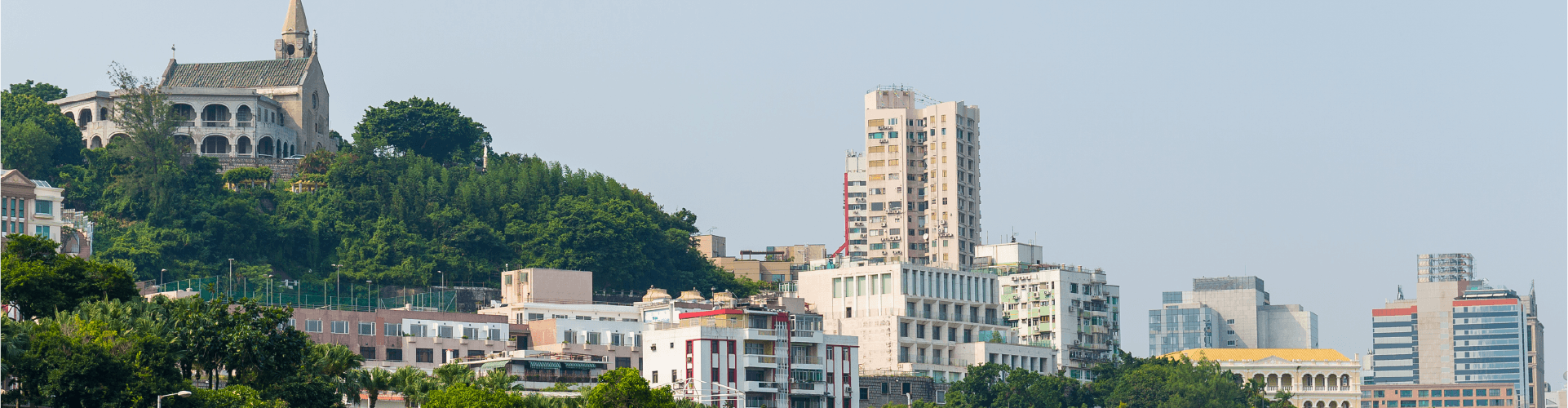
Macau is an international city located on the southeast coast of China. For hundreds of years since the mid-16th century, Macau has been a place where Chinese and Western cultures coexist harmoniously. Since December 20, 1999, the Macao Special Administrative Region of the People's Republic of China has been established. Under the guidance of the "one country, two systems" policy, Macao implements a high degree of autonomy and enjoys administrative power, legislative power, independent judicial power and final adjudication power. Macao's original social and economic characteristics will also be retained and continued.
Macao's economy has developed rapidly in recent years. The SAR government has adopted the "1+4" moderately diversified development strategy to promote the development of comprehensive tourism and leisure industries, as well as key industries such as comprehensive health, modern finance, high-tech, convention and exhibition trade, and culture and sports. In addition, Macao’s profound cultural heritage and many historical and cultural heritages left by the integration of Chinese and Western cultures for more than 400 years have also made Macao a unique city. It was successfully included in UNESCO’s World Heritage in 2005 and 2017 respectively. Directory", "Memory of the World Directory", and being designated as a UNESCO "Creative City of Gastronomy", allowing Macao to further showcase its unique historical and cultural features and rich and diverse connotations to the world.
Although Macau is small in area, with its rapid economic development in recent years, living standards have continued to improve. According to an ECA International research report, Macau was selected as the 15th most livable city in Asia in 2020. Reference indicators include climate, medical services, housing and related facilities.
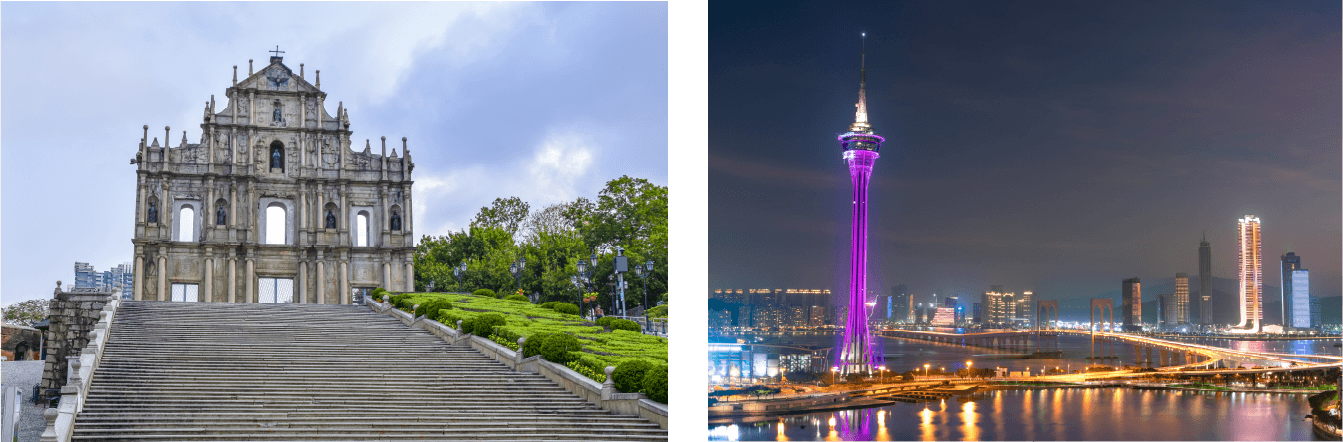
Macau is located at the southern tip of the Pearl River Delta on the southeastern coast of China, at 113°37'E and 22°04'N, 60 km from Hong Kong. The Macau region consists of the Macau Peninsula and two outlying islands, Taipa and Rowan, with a total area of approximately 33.3 square kilometers.
Macao is a monsoon area, with hot and rainy summers, sunny and refreshing autumns, and slightly colder winters with less rain. From June to September, the temperature reaches over 30 degrees Celsius, while from December to January the temperature can drop below 10 degrees Celsius. The annual average temperature is generally around 22.7 degrees Celsius. The hottest month of the year is July and the coldest month is January. In addition, Macau is often affected by tropical cyclones (typhoons) from the South Pacific in summer.
According to statistics in the second quarter of 2024, Macau has a population of approximately 680,000. The residents are mainly Chinese, including Portuguese and other nationalities.
The official languages of Macao are Chinese and Portuguese. Cantonese is commonly used by residents on a daily basis. Many residents can also communicate in Mandarin. English is also very popular in Macao and can be used in many situations. As Macao's connections with the mainland and other parts of the world become increasingly closer, the number of people using Mandarin and English as their daily language continues to increase.
Since industries emit fewer pollutants, the overall air quality is good. Looking at the whole year of 2022, the air quality in high-density residential areas has reached ordinary to good levels, and the average concentrations of various pollutants are also very low, meeting various standards.
Macao, like other international cities, has an increasingly complete tap water supply, and the tap water company provides high-quality, clean drinking water around the clock. Macao's drinking water is mainly supplied from the mainland. After the drinking water is imported into Macao, it is chlorinated, disinfected and filtered by the water company. Although the drinking water has been treated, it is still recommended to boil it before drinking to ensure cleanliness and hygiene.
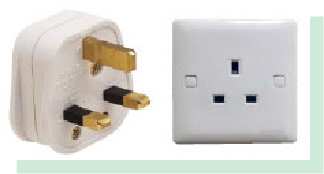
The voltage in Macau is 230 volts AC with a frequency of 50 Hz. Electrical sockets are usually square or round three-prong sockets.
External communications
Airport: Macau International Airport is located in Taipa, just a 15-minute drive from the Outer Harbor Passenger Terminal, a 20-minute drive to Guan Gate (the port leading to Zhuhai Arch North), and a 20-minute drive from the Cotai City Border Station (leading to the Hengqin Port ) is only a 10 minute drive. The airport operates 24 hours a day.
By sea: The Outer Harbor Ferry Terminal on the Macau Peninsula and the Taipa Ferry Terminal on the offshore islands provide 24-hour passenger services between Hong Kong city and Hong Kong International Airport, respectively. In addition, it also provides services to the Pearl River Delta routes to Guangzhou Nansha, Shenzhen Shekou and Fuyong Pier.
Land: Traveling by land from Macau to the Mainland can be done through Border Gate, Qingmao, Hengqin and other entry-exit channels. Among them, the Border Gate border station is open from 6 a.m. every day to 1 a.m. the next day; Qingmao and Hengqin The port immigration station is open 24 hours a day.
City Transportation
Bus (Bus): 2 bus companies in Macau provide large and small buses running between downtown Macau, Taipa and Rowan. Each station has explanatory route signs in Chinese and Portuguese, introducing the routes of each bus. Students can also ride at a discounted price, but must purchase a Student Macau Pass Card (recharge card) at the designated location in advance.
Taxi (taxi): Taxis in Macau have black bodies and cream-yellow roofs. All driving tolls are determined by the government. Passengers pay according to the fare meter on the car; and on April 1, 2017, e-hailing taxis have also been Officially put into service, providing taxi-hailing services by phone, mobile application and web page.
Charges (MOP)
First 1600 meters21.00
Jump meter (220 meters) 2.00
Light Rail:
Macau's first orbital transportation project, the Macau Light Rail Taipa Line is 9.3 kilometers long and has 11 stations. Fare (MOP) There are adult single tickets, concessionary single tickets and light rail passes.
Macau has hundreds of years of Chinese and Western food culture, and a variety of Chinese, Portuguese or other authentic and international delicacies can be found in the streets and alleys of Macau. Some institutions have canteens for use by faculty and students. The fees are generally cheaper than those in restaurants in the market. Living expenses are affordable. Students in Macao have a budget of about 25,000 to 45,000 patacas for living expenses per academic year.
What is the general consumption situation in Australia? The following consumer prices for items and services can be used as a reference:
| Consumption items | Reference price (MOP) |
|---|---|
|
McDonald's meal A 330ml can of Coke (purchased from a convenience store) One lunch at a general restaurant (including main ingredients, rice and soup) One lunch in the school cafeteria watch a movie Taxi (starting price) bus fare |
40-50 7 40-60 35-45 70-120 21 6-Use Macau Pass: 3 |
| (100 RMB = approximately 115 Macau Patacas) | |
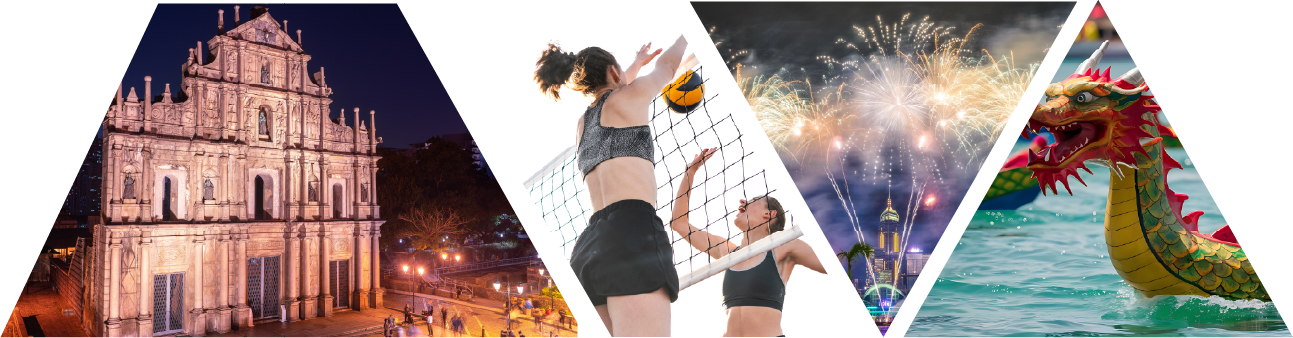
Macau is a city where Chinese and Western cultures meet. In addition to festivals, Macau hosts a number of large-scale international events every year, some of which include:
| Month | Festivals and events |
|---|---|
|
January-February March May May July October November December |
Chinese New Year, wonderful Lunar New Year celebration activities and float performances The Good Suffering Jesus Icon Tour Fatima Statue Parade, Buddha’s Birthday Festival, Drunken Dragon Festival, Tam Kung Festival, Macao Arts Festiva Macau Lotus Festival, Nezha Festival, Macau International Dragon Boat Races Macau Women's Volleyball World Grand Prix National Day, Mid-Autumn Festival, Macau International Music Festival, Macau International Fireworks Display Contest Macau Grand Prix, Macau Food Festival Macau International Parade, Macau International Film Festival and Awards Ceremony, Handover Celebration |
|
Note: The above schedule is for reference only and is subject to the actual announcement date in that year. In addition, there are 16 libraries in various districts across Macao, as well as nearly 20 government-owned and private museums, with exhibitions covering a wide range of themes. Various recreation and sports venues often provide different activities to residents at low or even free prices to enrich the public's leisure life. |
|
Currency
The currency of Macau is the Macau Pataca. Shops in some tourist areas also accept Hong Kong dollars, RMB, and other common foreign currencies. Visitors and residents can also freely go to banks or exchange shops to exchange foreign currencies.
Communication
Macao's external communications are very convenient, with comprehensive telecommunications network coverage and stable and reliable mobile network communication services. Consumers can freely choose suitable telecommunications providers to provide services.
There are more than 560 locations across Macao (including multiple public facilities, government venues and tourist attractions) providing free and convenient wireless broadband Internet (WIFI) services. In addition, fiber optic broadband services are also very popular in Macao.
Public Security
Macao is a place with good security. The police station and reporting center provide services around the clock. When you encounter an emergency and require police assistance, you can call 999, 993, 110 or 112 for help to report the crime.
Medical and insurance
Macao became a "healthy city" advocated by the United Nations World Health Organization in 2004 and was admitted as a founding member of the World Healthy Cities Alliance.
Macau's medical system is relatively developed. Non-local students are required to pay medical fees when going to public hospitals. It is also very convenient to seek medical treatment from private doctors. Each consultation fee is about 100 to 200 patacas. In order to protect the medical rights of non-local students, each university will develop a medical insurance plan for students, with annual fees starting from MOP 120.
Stay
Higher education institutions in Macau generally give priority to arranging accommodation in student dormitories for newly admitted students, and some institutions require that they must live in the school's dormitories in the first academic year. Accommodation fees vary from institution to institution, ranging from approximately 12,000 to 30,000 patacas per academic year.
 Address: First Floor, No. 7-9, Avenida John IV, Macau
Office hours: Monday to Thursday 9:00 a.m. to 1:00 p.m., 2:30 p.m. to 5:45 p.m.
Friday 9 a.m. to 1 a.m., 2:30 p.m. to 5:30 p.m.
 Tel:(853) 2855 5533
 Email:webmaster@dsedj.gov.mo
 Website:www.dsedj.gov.mo
 Fax:(853) 2871 1294